

India's Case Study
From Bare Land to a Ready-to-Use Capsule Home: An 8-Stage Construction Journey in India, Completed in 10 Days
In Mahabalipuram, India, there once stood an empty 42-square-meter plot that has now become a stunning example of modern living, all thanks to the power of modular capsule housing and a bold client who believed in doing things differently.
When the client first approached EB Enterprise, their vision was simple yet ambitious: they wanted a compact, stylish, and functional home that could be installed quickly, without the complexity, delays, and rising costs associated with traditional construction. With limited space and a tight timeline, a conventional build wasn’t an option. That’s when the I-shape Space Capsule House Extension Model became the perfect solution.
This case study documents every step of this journey, from the first layout drawing to the moment the home was ready for use. Through the eight-stage process guided by EB Enterprise’s foundation plan and installation manual, a team of six workers delivered, assembled, and completed the capsule home in 10 days while maintaining premium construction standards.
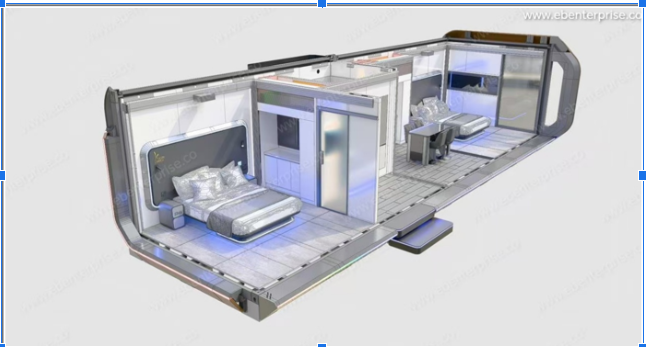
Stage 1 – Layout & Site Planning
Every successful capsule home begins with accurate planning. The first step involved a detailed site inspection to understand the land’s dimensions, soil conditions, and accessibility. Based on this data, a digital layout was created that positioned the capsule home in the most optimal location for sunlight, ventilation, drainage, and structural stability.
The goal was to maximize usable interior space while keeping the external footprint compact. Driveway access, service connections, and future expansion zones were also mapped out. This early planning stage ensured that no space was wasted and that the entire project would move forward without unexpected obstacles.
Stage 2 – Design Plan & Structural Alignment
With the layout approved, the next step was converting it into a complete construction and installation plan. This included architectural drawings, foundation placement, connection points for plumbing and electricity, and alignment of all prefabricated components.
The capsule home was engineered to fit precisely into the prepared space, eliminating the need for on-site modifications later. Floor load calculations, wind resistance, and local building conditions were all considered at this stage. The result was a perfectly aligned blueprint that allowed both factory production and on-site construction to move in sync.
Stage 3 – Base Foundation Construction
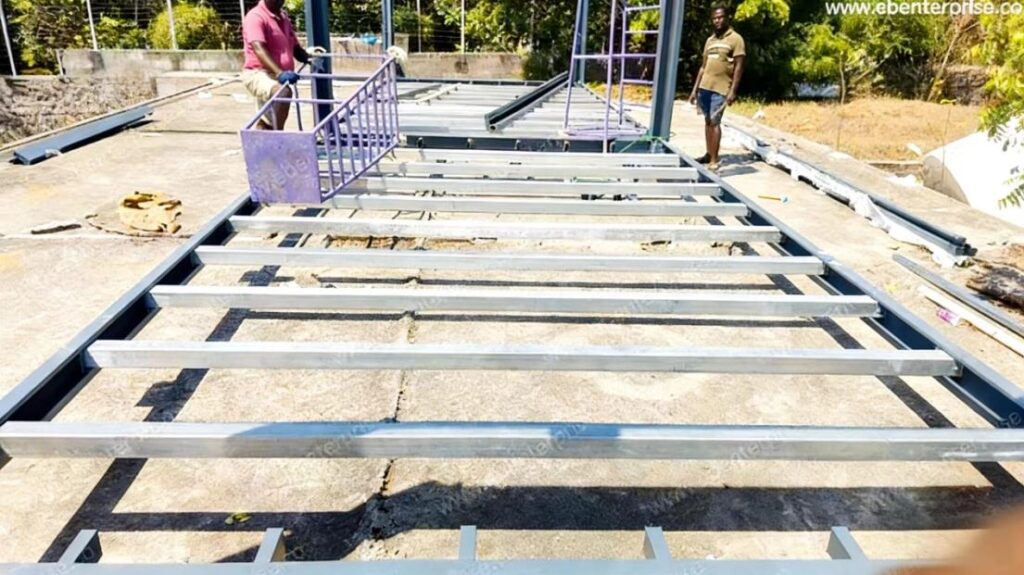
The foundation is the backbone of any structure. A reinforced concrete base was prepared according to the capsule unit’s specifications. Unlike traditional homes, where foundations often require multiple layers and extended curing time, this capsule base was designed to be strong, level, and ready for immediate installation.
Drainage channels, electrical conduit pathways, and plumbing sleeves were integrated directly into the base. This ensured that once the capsule unit arrived, all connections could be made smoothly without breaking or drilling into finished concrete.
Stage 4 – Side Glass Wall Fittings
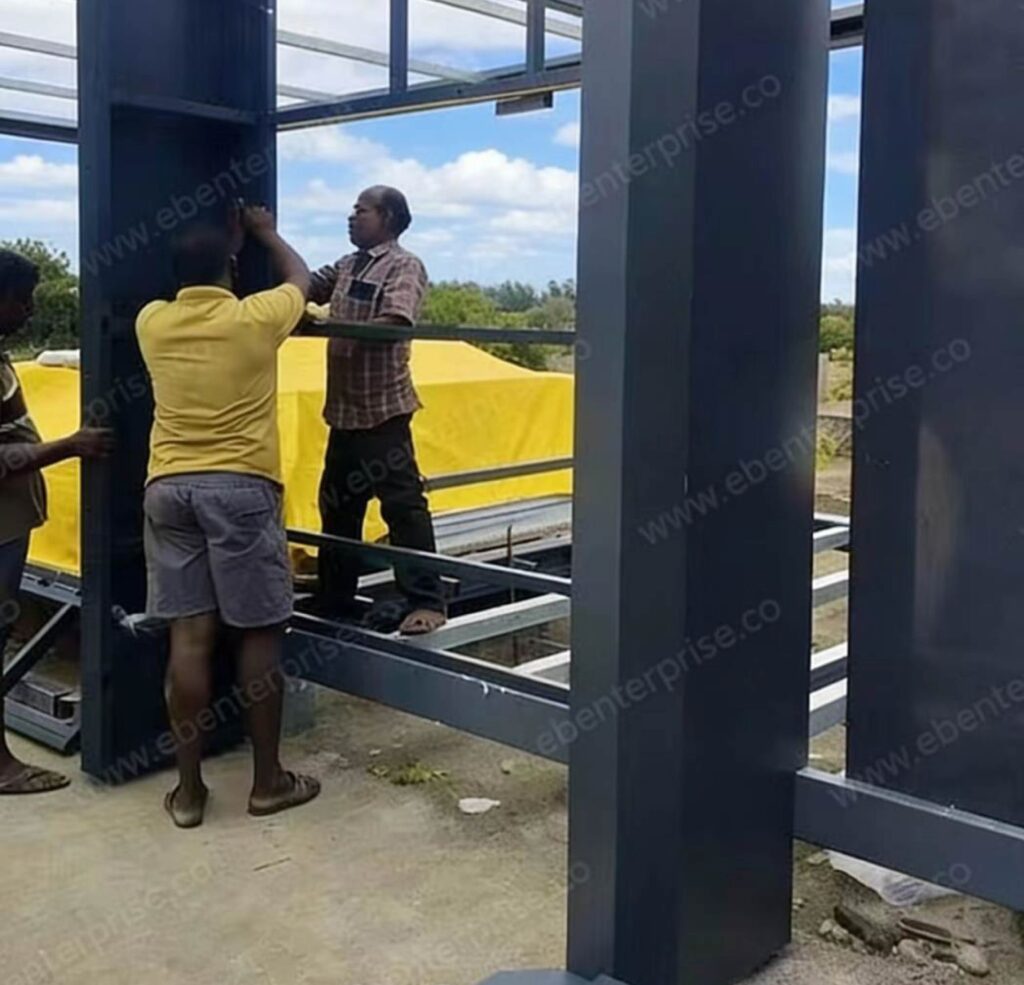
Once the foundation was complete, the focus shifted to installing the side structural supports and glass wall frames. These frames form the skeleton that holds the transparent wall panels and supports the capsule’s modern architectural style.
Each side frame was carefully mounted and leveled for perfect alignment. This step was critical because even a few millimeters of error could affect how the glass panels fit later. These walls would not only define the look of the home but also allow natural light to flood the interior.
Stage 5 – Installing the Glass Panels
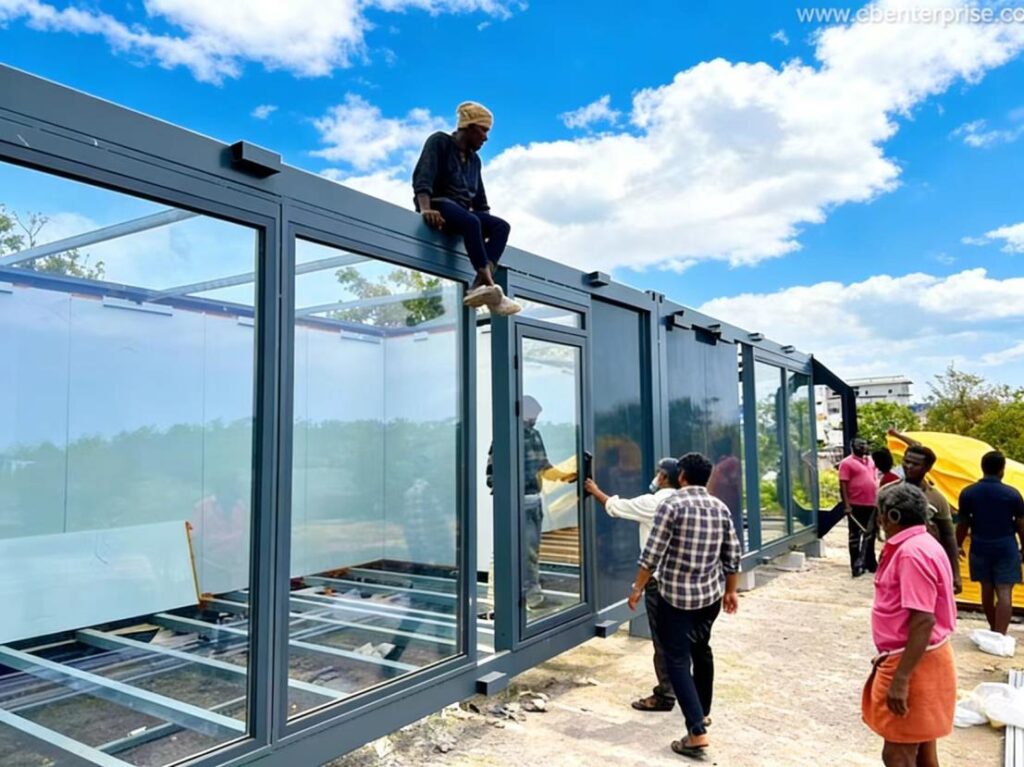
With the frames in place, the glass panels were installed. These high-performance panels were designed for thermal insulation, UV protection, and structural strength. One by one, each glass unit was lifted, positioned, and sealed into the side frames.
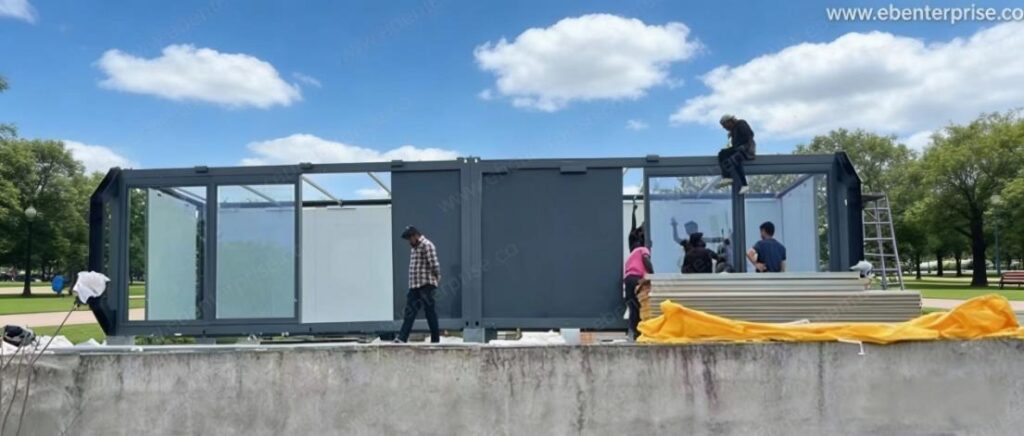
This stage instantly transformed the structure. What had looked like a skeletal shell now became a light-filled living space. In other words, the capsule home began to look like a finished residence rather than a construction site.
Stage 6 – Toiletries, Pipes, and Plumbing Fittings
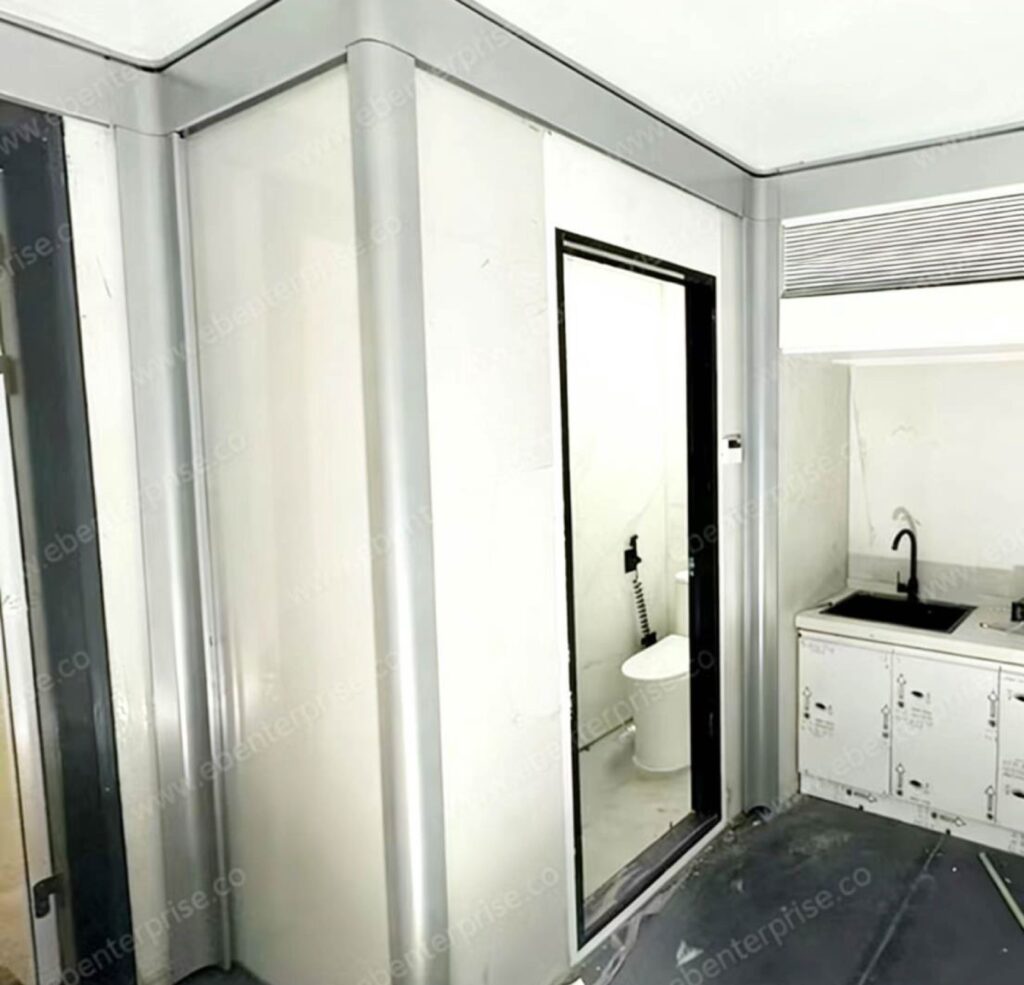
Behind the clean, modern look lies a complex network of plumbing. At this stage, all water lines, drainage pipes, and bathroom fittings were connected. Toilets, washbasins, showers, and kitchen connections were installed according to the pre-designed layout.
Because the capsule unit was factory-engineered, all plumbing points matched perfectly with the foundation outlets. This eliminated trial-and-error fitting and ensured leak-proof connections. The result was a fully functional water and sanitation system ready for long-term use.
Stage 7 – Final Inspection & Last-Minute Checks
Interior elements such as wall panels, cabinets, fixtures, and built-in furniture were already installed from the factory, requiring only final adjustments. This saved weeks of interior work compared to traditional construction.
Before handing over the capsule home, a detailed inspection was carried out. Every door, window, pipe, wire, and fitting was checked. Water pressure was tested, electrical systems were verified, and all glass seals were inspected.
Any minor adjustments were completed at this stage, ensuring that the home met quality and safety standards. This thorough inspection guaranteed that the capsule home was not just beautiful, but also safe and ready for daily living.
Stage 8 – Final Product Ready for Use
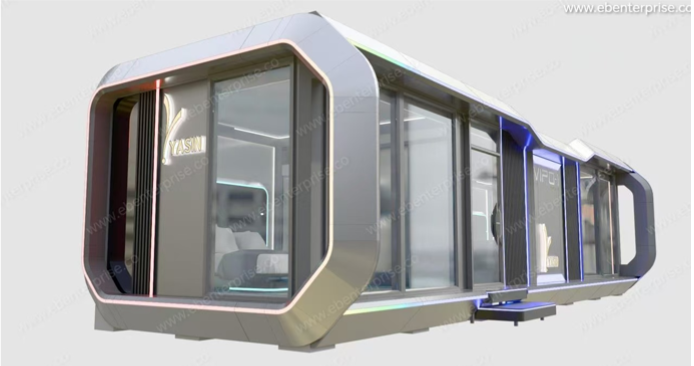
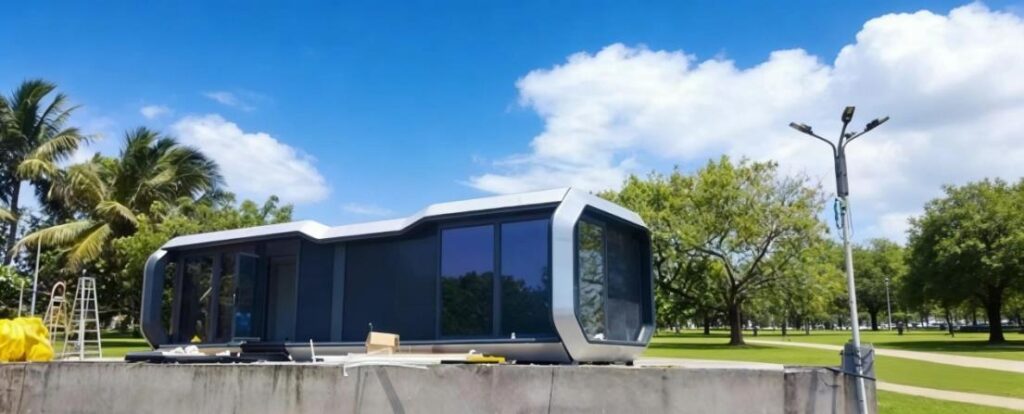
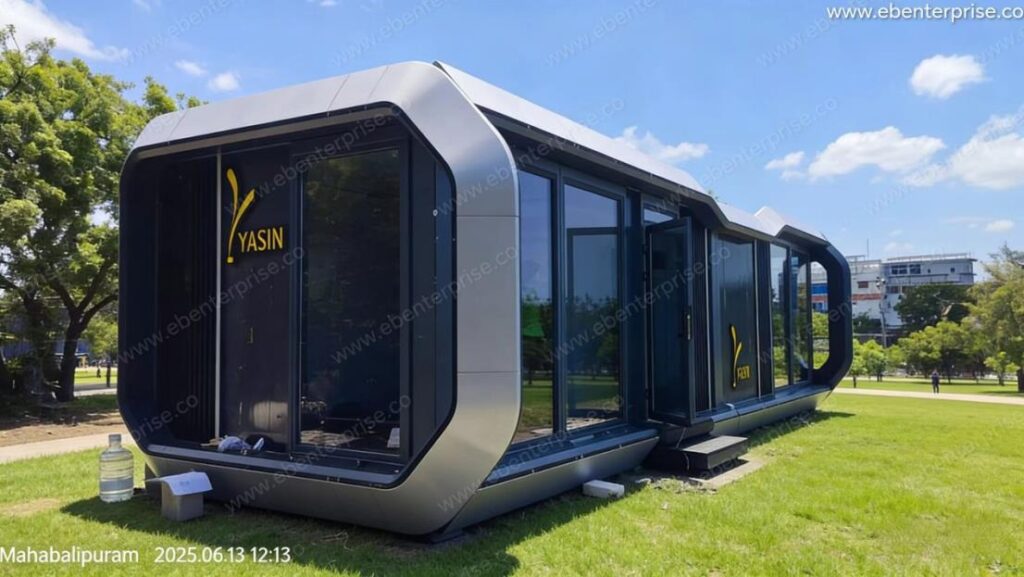
The final result was a fully operational, stylish, and modern capsule home. From the outside, it stood out with its sleek glass walls and compact design. Inside, it offered a comfortable, well-lit, and thoughtfully planned living space.
What made this project truly impressive was how smoothly everything came together. From layout to move-in-ready completion, this eight-stage process delivered a premium living environment in a fraction of the time required for traditional construction.
Conclusion
This capsule home project based in Mahabalipuram, India, proves that modern housing doesn’t have to be slow, complicated, or unpredictable. With a structured eight-stage process including layout and site planning, foundation setup, framing, glass installation, plumbing, systems setup, inspection, and final delivery, a complete home was created in just 10 days and with full perfection.
This 42-square-meter project is a future-ready living space that shows how housing can be smarter, faster, and more sustainable. This case study stands as a blueprint for what capsule homes can achieve across India and beyond.