

Modular House Factory in Saudi Arabia: Why More Developers Are Turning to China for Fast, Reliable Housing
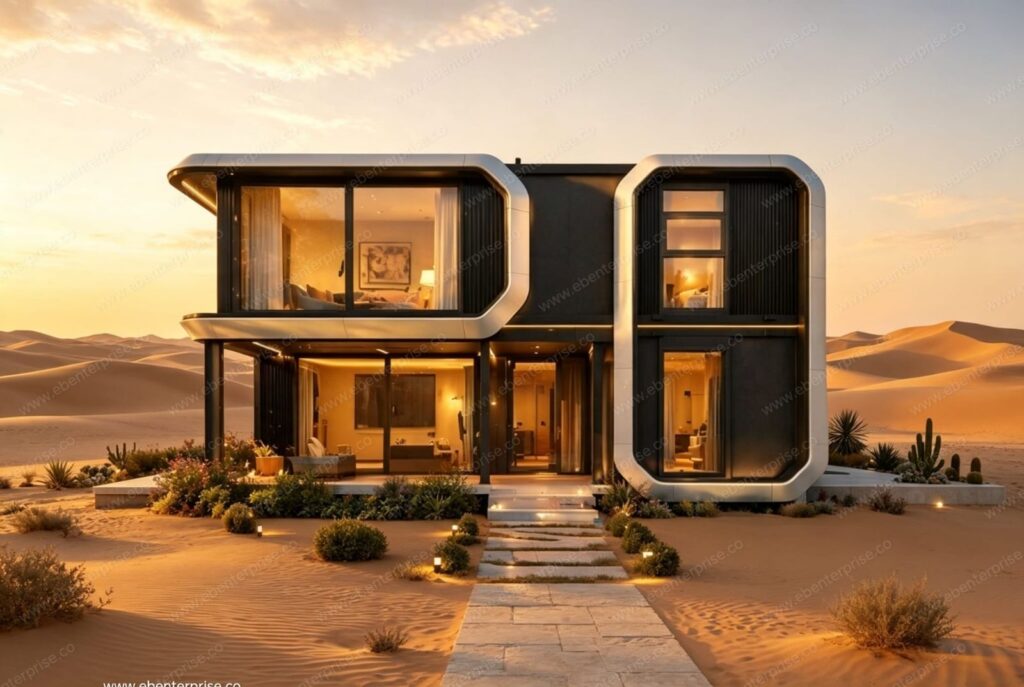
Modular House Factory in Saudi Arabia: Why More Developers Are Turning to China for Fast, Reliable Housing What do you do when your project timeline is fixed, your labor pool is stretched thin, and traditional construction simply can’t keep pace? This is the question facing developers, contractors, and facility managers across the Kingdom right now. Sites are opening faster than skilled crews can be trained. Housing is needed before the concrete can even cure. And every month of delay costs real money. This is exactly why the search for a dependable modular house factory in Saudi Arabia has grown so fast over the last few years. Developers aren’t just looking for a supplier anymore — they’re looking for a manufacturing partner who understands scale, speed, and long-term reliability. Saudi Arabia’s construction sector is going through one of the biggest transformations in its history. Vision 2030 has pushed cities, giga-projects, and housing programs to move faster than conventional building methods allow. That single shift explains why factory-built housing has moved from a “nice option” to a practical necessity for so many businesses. This article breaks down what modular housing actually is, why the Kingdom needs it, why importing from China has become the smart business decision, and why EB Enterprise has earned the trust of developers across the region. What a Modular House Factory Actually Does A modular house factory builds complete housing units — or large sections of a building — inside a controlled factory environment. Walls, wiring, plumbing, insulation, and finishing are done indoors, under consistent quality checks. The finished modules are then shipped to the site and assembled, sometimes within days. This is different from ordering a few prefab panels. A true factory production line manages the entire unit: structure, interior, electrical, and exterior cladding, all built to a repeatable standard. For a country managing multiple giga-projects at once — from new economic cities to large residential communities — this kind of predictable, factory-grade output solves a real bottleneck. Traditional on-site construction depends heavily on weather, labor availability, and material delivery schedules. Factory production removes most of that uncertainty. Why Saudi Arabia Needs This Solution Right Now The Kingdom’s housing targets are enormous. Government programs are working to raise homeownership significantly by the end of the decade, which means hundreds of thousands of new housing units need to be built in a relatively short window. At the same time, giga-projects and new economic zones need workforce housing almost immediately — long before permanent residential neighborhoods are ready. Labor camps, site offices, and temporary staff accommodation all need to appear fast, without compromising safety or comfort. Add to this the Kingdom’s harsh climate, tight skilled-labor supply, and ambitious project deadlines tied to major international events, and it becomes clear why a prefab house manufacturer in Saudi Arabia is no longer a backup plan — it’s part of the core project strategy for many contractors. Modular construction directly answers three pressing needs: Speed — units can be produced in parallel with site preparation, instead of waiting for foundations to finish first. Consistency — factory conditions remove weather delays and reduce human error. Cost control — bulk manufacturing and standardized designs bring predictable pricing, which matters enormously on large developments. This is also why EB Enterprise plays a growing role for teams working in Saudi Arabia. Many project managers simply don’t have the internal capacity to manage scattered local suppliers for every housing phase, so they look for one manufacturing partner who can deliver consistent quality across an entire project, shipment after shipment. Space Capsule Houses: A Compact Answer to Fast Deployment One trend gaining real traction is the space capsule house in Saudi Arabia. These are compact, self-contained living units — insulated, furnished, and ready to connect to power and water almost as soon as they arrive on-site. Capsule housing works well for a simple reason: it doesn’t need a traditional foundation or long assembly process. A crane places the unit, technicians connect utilities, and it’s ready for occupancy. For remote desert sites, tourism destinations, or fast-moving giga-project zones, this kind of speed is hard to match with conventional building. Hospitality operators have also started using capsule-style units for boutique desert resorts and eco-tourism camps, where a distinctive design matters as much as functionality. Tiny Mobile Homes: Flexible Housing Where It’s Needed Most Alongside capsule units, tiny mobile homes in Saudi Arabia are becoming a practical choice for site offices, staff accommodation, and short-term residential needs. These units are compact, fully finished, and easy to relocate if a project’s footprint changes. Mobile homes are especially useful for developers managing multi-phase projects. Instead of committing to permanent structures early, a project can house staff or manage site logistics with mobile units, then relocate or repurpose them once the permanent facilities are complete. This flexibility is a major reason facility managers now specifically request tiny mobile home options during the planning stage, rather than treating them as an afterthought. Portable Capsule Houses for Labor Camps, Events, and Temporary Sites A closely related solution is the portable capsule house in Saudi Arabia — designed for quick deployment and just as quick removal. These units are common on labor camps, exhibition sites, and short-duration project locations where the housing need is real but temporary. Because these units are built to be transported repeatedly, durability during transit matters just as much as comfort once installed. This is where manufacturing quality becomes critical. A poorly built portable unit may look fine on delivery but fail after two or three relocations. A well-engineered one can be moved across multiple projects for years without structural issues. Why Businesses Prefer Working With a Dedicated Prefab Manufacturer Many contractors initially try to source modular units locally, only to run into a familiar problem: limited production capacity. Local workshops can often handle small orders, but struggle when a project needs fifty, one hundred, or several hundred units delivered on a fixed schedule. This is where working with an established prefab