

Capsule House Factory in Philippines: Exploring Modern Modular Living and Glamping Solutions
The way people think about housing is changing. Across the Philippines, homeowners, property developers, and hospitality businesses are exploring innovative living spaces that combine comfort, efficient construction, and contemporary design.
From compact vacation retreats to spacious prefabricated residences, alternative housing solutions offer exciting possibilities for different lifestyles and budgets. A capsule house factory in Philippines can play an important role in this transformation by providing factory-built accommodation and modular housing concepts designed for specific project requirements.
But what makes capsule houses attractive? How do they compare with modular homes and double-wide mobile homes? And what should you consider before investing in one?
Let’s explore how these modern housing options can fit residential, commercial, and tourism projects in the Philippines.
What Is a Capsule House?
A capsule house is a compact, prefabricated structure designed to use space efficiently while providing essential living or accommodation facilities. Depending on the design, it may include a bedroom, bathroom, kitchenette, storage, panoramic windows, and climate-control features.
Unlike conventional construction, many capsule houses are manufactured in controlled factory environments before being transported to their final location.
Working with a capsule house factory in Philippines can help buyers explore different designs, materials, layouts, and installation requirements based on their intended use.
For example, a compact capsule might be suitable for a weekend retreat, while a larger model could be designed for a guest accommodation project. The key is selecting a design that balances comfort, functionality, and the practical requirements of the site.
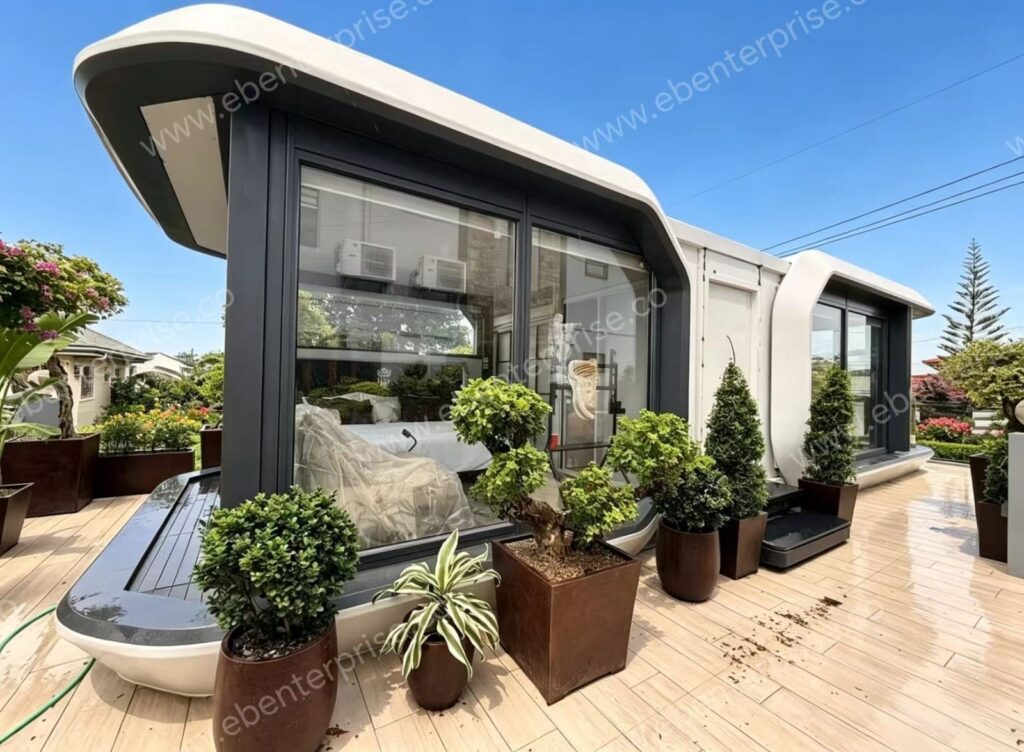
Why Are Capsule Houses Gaining Attention in the Philippines?
- Vacation homes and private retreats
- Resort and tourism accommodation
- Guest houses
- Compact residential spaces
- Rental properties
- Glamping destinations
- Commercial hospitality projects
Custom Modular Houses: Designed Around Your Lifestyle
Not every homeowner wants a compact capsule. Some prefer a spacious residence with multiple bedrooms, a functional kitchen, and comfortable living areas.
This is where a custom modular house in Philippines can provide an alternative. Modular homes are constructed in sections, typically within a manufacturing facility, and then assembled at the final location.
The biggest advantage is design flexibility. Depending on the manufacturer, homeowners may be able to customize:
- Bedroom arrangements
- Kitchen and dining areas
- Bathroom layouts
- Interior finishes
- Windows and doors
- Storage solutions
- Outdoor spaces
- Electrical and plumbing configurations
A custom modular house in Philippines can be planned for a family residence, vacation property, or investment project. The design should reflect the household’s needs rather than simply prioritizing appearance.
For example, a family may need additional storage and private bedrooms, while a holiday property may benefit from open-plan living areas and outdoor entertainment space.
Capsule Houses vs. Modular Houses: Which Is Right for You?
Although capsule and modular homes both use prefabricated construction methods, they serve different purposes.
A capsule house generally focuses on compact accommodation, efficient space utilization, and distinctive architecture. A modular house can offer greater flexibility in terms of size, room configuration, and long-term residential use.
When comparing a capsule house factory in Philippines with modular housing manufacturers, consider the following factors.
Space Requirements
Capsule houses are often designed for compact living or accommodation. They may be ideal for individuals, couples, guest units, and hospitality projects.
Modular houses can provide larger floor plans, making them potentially more suitable for families or buyers who require multiple rooms.
Customization
Some capsule models have predefined layouts, while others offer customization options. Modular houses may provide more flexibility for expanding or adapting residential layouts.
Intended Use
A capsule could work well for a holiday retreat or glamping project. A modular home may be more appropriate for a permanent residence, depending on its design and regulatory classification.
Budget Planning
The cost of either option depends on size, materials, specifications, transportation, installation, site preparation, and additional services. Buyers should request a detailed project quotation rather than relying only on the base unit price.
Understanding Double Wide Mobile Homes in the Philippines
- Overall dimensions
- Structural specifications
- Transport arrangements
- Site access
- Foundation requirements
- Insulation and ventilation
- Electrical and plumbing systems
- Installation support
- Warranty terms
Are Double Wide Mobile Homes Suitable for Family Living?
Families often need more than a compact sleeping space. They may require separate bedrooms, a larger kitchen, comfortable common areas, and storage for everyday belongings.
Depending on their configuration, double-wide mobile homes in Philippines may offer a practical approach to spacious prefabricated accommodation.
However, the suitability of a particular model depends on its design, construction quality, site conditions, and compliance with relevant standards.
When comparing double-wide mobile homes for sale in Philippines, don’t focus solely on floor area. Think about how the home will be used daily.
For instance, a family with children may prioritize bedroom separation and study space. A couple may prefer an open-plan layout with a larger living area. A holiday property may need additional outdoor space for entertaining guests.
The best floor plan is one that supports the occupants’ actual routines.
Glamping Capsules: Creating Memorable Guest Experiences
- Nature retreats
- Resort developments
- Private tourism properties
- Mountain accommodation
- Coastal hospitality projects
- Weekend getaway destinations
Choosing the Right Capsule House Factory
Selecting a reliable capsule house factory in Philippines is an important part of any prefabricated housing project.
A manufacturer’s product photographs may look impressive, but buyers should also understand what is included in the actual quotation and construction specification.
1. Manufacturing Experience
Ask about the manufacturer’s experience producing capsule homes, modular units, or similar prefabricated structures.
2. Materials and Construction
Review the structural materials, insulation, windows, waterproofing, finishes, and quality-control procedures.
3. Customization Options
If you have a particular floor plan or aesthetic in mind, confirm whether the manufacturer can accommodate your requirements.
4. Delivery and Installation
Find out how the unit will be transported, what site preparation is needed, and whether installation assistance is included.
5. After-Sales Support
Ask about warranties, maintenance, replacement components, and technical assistance after installation.
A transparent manufacturer should be willing to explain these details clearly before you finalize the purchase.
Climate Considerations for Capsule and Modular Homes
The Philippines experiences a tropical climate, with many areas exposed to high humidity, heavy rainfall, and typhoons. These factors should be considered during the design and selection process.
Whether you’re exploring a capsule house factory in Philippines or a modular home supplier, discuss the following:
- Water Resistance: Roofing, exterior joints, windows, and drainage systems should be appropriate for the local environment.
- Ventilation: Adequate airflow can support indoor comfort and help manage humidity.
- Insulation: Suitable insulation and reflective design features may help reduce heat transfer.
- Structural Requirements: The building’s design and installation should account for applicable local wind, seismic, and construction requirements.
- Maintenance: Exterior finishes, seals, drainage, and mechanical systems should be accessible for inspection and upkeep.
The precise requirements depend on the location, structure, and applicable regulations. A qualified local professional should review the project before construction or installation.
EB Enterprise: Exploring Modern Prefabricated Housing Solutions
EB Enterprise offers a range of modern prefabricated housing concepts that can be relevant to residential and hospitality projects. For customers exploring a capsule house factory in Philippines, the company provides an opportunity to consider compact living designs alongside broader modular housing possibilities. Whether the goal is a private retreat, a tourism accommodation project, or a customized residence, choosing a manufacturer that understands design, production, and installation requirements can help streamline the planning process. Buyers should discuss available models, customization, specifications, and project logistics directly with EB Enterprise to determine which solution aligns with their requirements.
How to Plan Your Capsule or Modular Home Project
Before ordering a custom modular house in Philippines or a capsule unit, it helps to establish a clear project plan.
Step 1: Define Your Purpose
Decide whether the structure will be used as a permanent residence, vacation home, rental property, guest accommodation, or glamping unit.
Step 2: Assess Your Land
Check the available space, road access, terrain, utilities, drainage, and foundation requirements.
Step 3: Establish Your Budget
Consider the complete cost, including the structure, transportation, site preparation, installation, utility connections, and required professional services.
Step 4: Compare Manufacturers
Review product specifications, customization options, project timelines, warranty coverage, and customer support.
Step 5: Confirm Regulatory Requirements
Check local zoning, permits, building standards, and occupancy requirements before proceeding.
This process can help you avoid selecting a structure that looks attractive but does not suit your site or intended use.
Final Thoughts
The future of housing is not limited to traditional construction. Compact capsule homes, customized modular residences, and spacious prefabricated housing options are creating new possibilities for homeowners, developers, and hospitality businesses.
A capsule house factory in Philippines can help buyers explore innovative designs for retreats, guest accommodation, and compact living. Meanwhile, a custom modular house in Philippines may offer the flexibility needed for larger residential projects.
For buyers considering double-wide mobile homes for sale in Philippines, careful evaluation of space, construction, installation, and regulations is essential. Similarly, a glamping capsule in Philippines can provide an interesting way to develop memorable tourism experiences when the design is planned around the location and guests’ needs.
Ultimately, the right housing solution depends on your lifestyle, budget, site, and long-term objectives. With careful research and a suitable manufacturing partner, prefabricated housing can offer a practical and creative path toward modern living in the Philippines.
Frequently Asked Questions (FAQs)
1. What is a capsule house factory in the Philippines?
A capsule house factory in Philippines manufactures compact prefabricated structures, often designed for residential, recreational, or hospitality applications. Units may be produced in a controlled environment and transported to the installation site.
2. Can I customize a modular house in the Philippines?
Yes, customization may be available depending on the manufacturer and product. A custom modular house in Philippines can potentially be adapted through layout choices, finishes, room arrangements, and selected features.
3. Are double-wide mobile homes available in the Philippines?
Double-wide mobile homes in Philippines may be available through certain suppliers or manufacturers. Buyers should verify current product availability, construction specifications, transportation arrangements, and local regulatory requirements.
4. Can a glamping capsule be used for a tourism business?
Yes, a glamping capsule in Philippines can be considered for tourism and hospitality projects. Its suitability depends on the location, design, climate protection, guest facilities, permits, and operational requirements.
5. How do I choose a reliable prefab home manufacturer?
Look for a manufacturer that provides clear specifications, transparent pricing, customization options, quality information, installation support, and warranty details. Compare the complete offering before choosing a capsule house factory in Philippines for your project.